Operation News-November 2026

Foiled by a Worm!
The New World Screwworm Arrives in Arizona
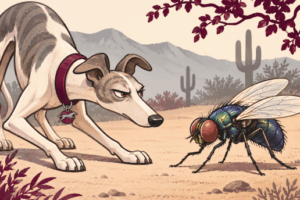 Once again, my best-laid plans have been thwarted by a worm.
This month’s article was supposed to feature the dos and don’ts of keeping our pets safe during the holidays. But apparently, Mother Nature had other plans. Never fear! I saved a copy of last year’s holiday safety guidelines, which you can read here.
Now, back to the worm.
Just when I thought we’d had enough excitement in the parasite department, along comes the New World screwworm. And this little nightmare has officially made its way to Southern Arizona.
Arizona’s first confirmed case was discovered in a dog in Cochise County in late October. Since then, additional cases have been reported in Southern Arizona.
Well, isn’t that just lovely?
Let’s talk about what this creepy little creature is, why we should be concerned, and what we can do to protect our hounds.
What Is a New World Screwworm?
It all starts with a fly. Not just any fly, mind you, but a very specific one called Cochliomyia hominivorax.
Try saying that three times fast.
The female fly is particularly attracted to open wounds and vulnerable areas of warm-blooded animals, including the nose, ears, and genital areas. And when I say wounds, I don’t necessarily mean something significant. Even something as small as a tick bite can attract these unwelcome visitors.
The female lays her eggs along the edges of a wound, sometimes depositing as many as 300 eggs at a time.
300! Yikes!
Within approximately 12 to 24 hours, those eggs hatch into larvae (maggots) equipped with sharp, hook-like mouthparts that burrow into living tissue.
Unlike ordinary maggots that feed on dead tissue, screwworm larvae feed on healthy, living flesh.
I know. Disgusting.
The larvae feed for several days, creating painful, often foul-smelling wounds that can become progressively larger and more destructive. Left untreated, severe infestations can be fatal.
And here I thought hookworms were bad.
What Animals Are Affected?
Unfortunately, the New World screwworm isn’t particularly picky about its dinner guests. Any warm-blooded animal can be affected.
Livestock: Cattle, sheep, goats, horses, and pigs are particularly vulnerable.
Wildlife: Deer, elk, wild boars, and other mammals.
Pets: Yes, our beloved dogs and cats are on the menu.
Birds: Although less common, birds can also be affected.
Humans: Rarely, humans can become accidental hosts, particularly when flies are attracted to open wounds.
In other words, this is one parasite we’d all prefer to keep off the guest list.
What Should Greyhound Owners Watch For?
Our greyhounds are particularly talented at acquiring mystery cuts and scrapes. With their thin skin and seemingly endless ability to bump into things, a routine inspection is always a good idea.
Be on the lookout for:
Open wounds, even small ones
Wounds that aren’t healing normally
Swelling, redness, or unusual discharge
An unpleasant odor coming from a wound
Excessive licking or irritation
Visible larvae in or around a wound
Changes in behavior, including discomfort, restlessness, or loss of appetite
If you suspect a screwworm, contact your veterinarian immediately. Don’t attempt to remove the larvae yourself or try home remedies. Prompt veterinary treatment is essential.
Now what?
First, don’t panic. Although cases have been confirmed in Southern Arizona, that doesn’t mean every fly buzzing around your backyard is a screwworm. But let’s face it. Flies are going to do what flies do. FLY. And with cases now confirmed in our part of the state, I think a little extra vigilance is warranted.
Here are a few things we can do to help protect our hounds:
Check your dog daily. Pay particular attention to cuts, scrapes, ears, paws and other vulnerable areas.
Keep wounds clean and protected. Consult your veterinarian about appropriate wound care.
Monitor even minor injuries. Don’t dismiss that tiny scrape your greyhound acquired while doing something only a greyhound could manage.
Reduce exposure to flies. Keep your home and yard clean, and consider limiting outdoor exposure if your dog has an open wound.
Call your veterinarian if something looks suspicious. Early detection can make all the difference.
Fortunately, the University of Arizona College of Veterinary Medicine has published an excellent guide for pet owners explaining what to look for and what steps to take.
You can access it HERE.
Be aware that some of the educational materials contain graphic images. Definitely not recommended reading over breakfast.
What About Treatment?
I spoke with our veterinarians at Briarcrest recently about treatment options should screwworm become a concern in the Tucson area. The good news is that veterinary treatments are available.
The FDA has authorized several medications for treating New World screwworm infestations in dogs, including NexGard, with additional treatment options becoming available.
However, treatment isn’t simply a matter of giving your dog a pill and calling it a day. An affected dog requires prompt veterinary care, including appropriate wound treatment.
Please consult your veterinarian before starting or changing any medication. They can recommend the appropriate treatment based on your dog’s individual needs and the latest guidance.
One Final Thought
As if we greyhound owners needed one more thing to worry about!
Between hookworms, valley fever, rattlesnakes, cactus spines and the occasional greyhound who believes the coffee table is an appropriate obstacle course, we already have our hands full.
Now we can add screwworms to the list.
But knowledge is power, and a little prevention goes a long way. Keep an eye on your hounds, check those mystery scrapes and don’t hesitate to contact your veterinarian if something doesn’t look right.
And to the New World screwworm? We have enough worms in our lives, thank you very much. You’re not welcome here!
Nancy Lynberg is the Operations Director of Southern Arizona Greyhound Adoption and can be reached at nancy@sagreys.org.